Faena Rose Patron Series
Peru · Spring 2027/Operated by West Zephyr
Faena Rose × West Zephyr · A Patron Expedition

Three peoples, three sacred geographies

The Quechua weave the mountain into cloth. The lake peoples read water three thousand years old. On the Amazon, a year is measured in thirty feet of flood. One thread, followed the length of a country.

WhenMarch to May 2027
Group12 to 18 travelers
Length8 or 9 nights
Two routesAmazon, or overland
The thread

Three lineages, told in cloth, salt and song

Peru is not one country. It is three, stacked vertically, and the peoples who live at each altitude have almost nothing in common except the mountains between them. This journey follows one thread through all three: three indigenous lineages, each with its own cosmology, its own geography, and its own visual language rendered in cloth, salt, song and stone.

Quechua. The Sacred Valley, where the mountain itself is woven into the textile: agricultural calendars, ancestor stories, the topography of the high Andes recorded in alpaca and natural dye. Manuel Choqque farming three hundred and eighty potato varieties in ruby, indigo and amethyst for the kitchens at Mil and Central. Nilda Callanaupa's weavers at the Centro de Textiles Tradicionales, still dyeing with lichen and cochineal. A Q'ero paqo opening the journey in offering to the mountains.

The lake peoples. Twelve thousand five hundred feet, on the highest navigable water on earth. A different language, a different set of hands. On Taquile the men weave, rare in the Andes and recognized by UNESCO as intangible heritage of humanity, and a belt tells you a man's standing before he speaks. Reed boats, stone observatories, and a lake that people have been reading for three thousand years.

The river people. Sea level, in flood. Between December and May the forest goes under and the skiffs travel where there is no ground, into channels that are dry footpaths by September. The ribereño communities of Pacaya-Samiria live on a thirty-foot annual tide and have built an entire calendar around it. At Nueva Arica, a Kukama-Kukamiria village deep enough into the reserve that few boats reach it, forty species of stingless bee are kept against thousands of flowering plants, for a honey that does not leave the river. The approach is what people remember: as the skiff comes in, hundreds of birds lift off the water and fly alongside it.

Two routes follow that thread. The first runs all three, finishing on the water. The second trades the Amazon for alpaca country and the emptiest quarter of the altiplano.

Not a tour of indigenous traditions. A private exchange: tables in family compounds, ceremony at altitude, workshops with people whose work hangs in collections.
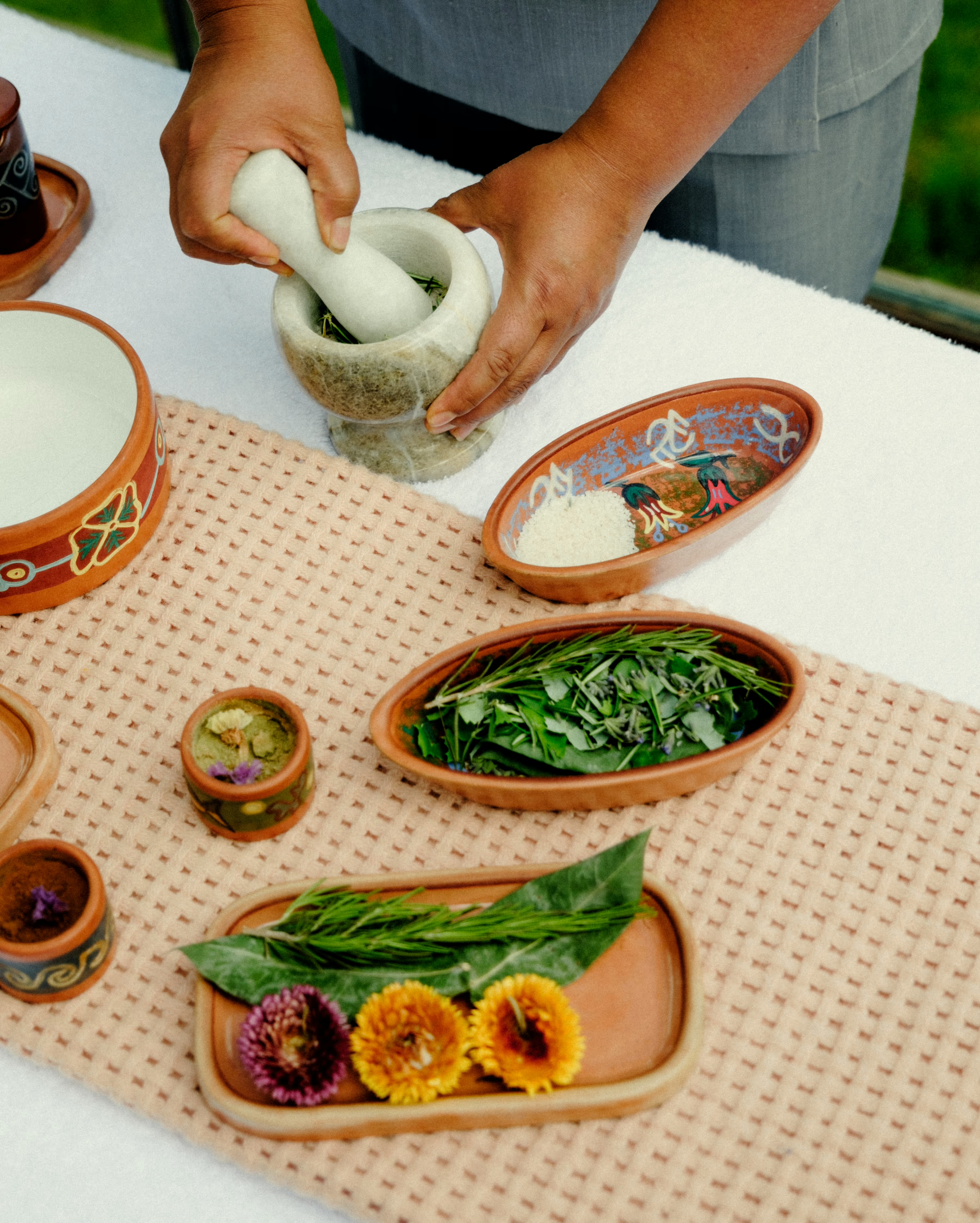
Hands grinding herbs in a stone mortar beside painted dishes of Andean flowers, grains and greens
Quechua · the Sacred Valley
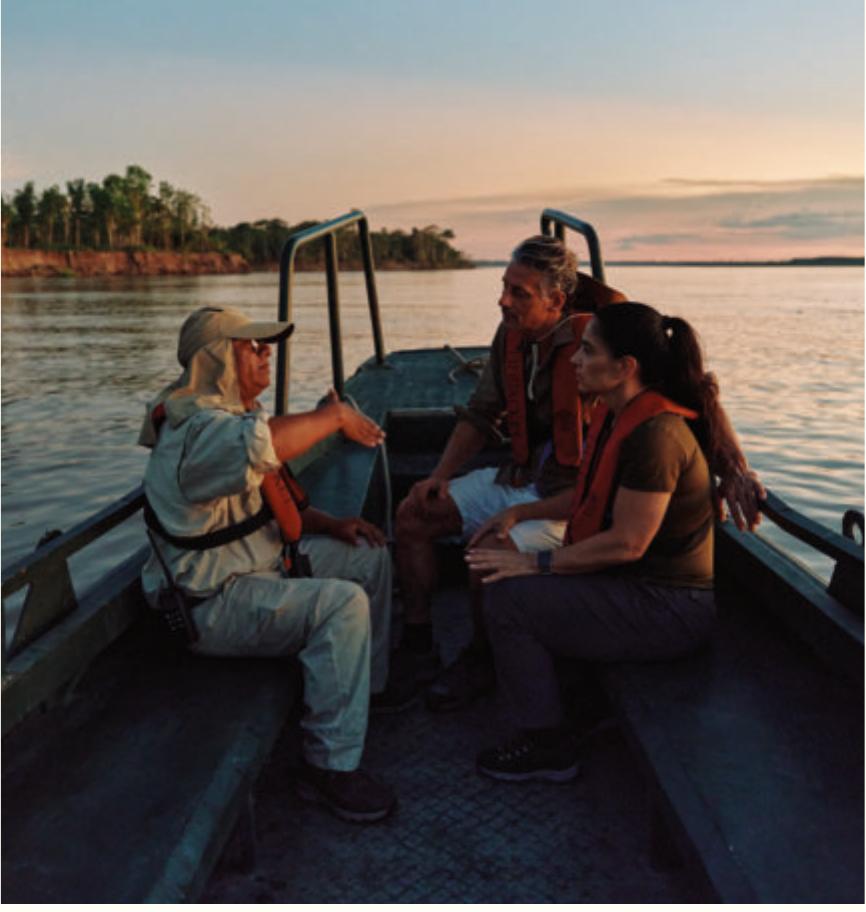
Guests and a guide aboard a small skiff on a still Amazon river at sunset
The river people · Pacaya-Samiria
The arc

An altitude curve that respects the body

Descend into the Sacred Valley to acclimatize, climb to the lake, then drop to the river. Both routes open the same way. What changes is where the third act happens.

Route one · 9 nights
Lima CONNECTIONS ONLY Pacaya-Samiria Embark Nauta · 330 ft 3 nights afloat Sacred Valley & Cusco 9,200 ft 4 nights Lake Titicaca 12,500 ft 2 nights FLY VIA LIMA
Mountain, lake, flooded forest. All three lineages, and two flying days that both connect through Lima.
Route two · 8 nights
Sacred Valley & Cusco 9,200 ft 4 nights Tinajani 12,800 ft · six tents 2 nights Lake Titicaca 12,500 ft 2 nights FULL DAY OVERLAND OVERLAND SOUTHERN HIGHLANDS, ENLARGED
The same opening, then the high plateau instead of the river. One flight in the whole trip, home from Juliaca.
Route one · all three lineages

Mountain, lake, flooded forest

Sacred Valley, Cusco, Lake Titicaca, then three nights in the flooded forest on a boat that is yours alone from sixteen travelers. Dates below are built on the Wednesday 12 May 2027 sailing; 5 to 8 May runs identically.

Thu 6 May
The offeringArrive Cusco and transfer straight down to the Sacred Valley, which sits a thousand feet lower and does the acclimatizing for you. Picnic lunch on the way. At sunset, a despacho with a Q'ero paqo. Welcome dinner in the hotel gardens.
Belmond Rio Sagrado
Fri 7 May
Salt, terraces, and the research kitchenThe salt pans at Maras by car, then the walk down through the village to the concentric terraces at Moray. Lunch at Mil, in its private dining room with the wine pairing.
Belmond Rio Sagrado
Sat 8 May
Choose your trackChoose in the morning: Ollantaytambo and the climb to Pumamarca, or the Seminario pottery studio and a curator-led hour in the Alqa museum. Both end at the same table for a pachamanca lunch on a farm, cooked in the ground, with the Chinchero weavers.
Belmond Rio Sagrado
Sun 9 May
From the farm to the loomMorning at Manuel Choqque's farm, three hundred and eighty varieties in colors that do not look like food, grown for Mil and Central and fermented into potato wine. Afternoon at the Centro de Textiles Tradicionales with Nilda Callanaupa's senior weavers, where the dye is still lichen and cochineal. Continue to Cusco.
Belmond Palacio Nazarenas
Mon 10 May
Up to the altiplanoFly Cusco to Juliaca via Lima, then an hour south past Puno to the far shore. There is no town out there and no other hotel. An Andean ceremony on arrival, dinner looking at the water.
Titilaka
Tue 11 May
The lake that keeps timeThe lake at twelve thousand five hundred feet, on the hotel's own boats rather than the day-tripper circuit. The reed islands early, then Taquile, where the men weave and a belt tells you a man's standing before he speaks. Ceremony on the water at sunset.
Titilaka
Wed 12 May
Down to the water worldFly Juliaca to Iquitos via Lima. Iquitos is the largest city on earth you cannot drive to. An hour and forty-five minutes by road to Nauta, then aboard. Briefing in the Jungle Lounge, dinner as the boat settles.
Pure Amazon
Thu 13 May
The village at the end of the waterOut before breakfast by skiff on a blackwater creek, where the red howler monkeys start up at dawn. In the afternoon, further into the reserve than most boats go, to Nueva Arica: forty species of stingless bee worked against thousands of flowering plants, a honey that never leaves the river, and an hour with people who will tell you how a year works when the water moves thirty feet. Coming in, the birds lift off the water ahead of the skiff and fly alongside it.
Pure Amazon
Fri 14 May
The reserve at first lightSunrise by skiff in the flooded forest, looking for macaws, toucans, howler monkeys and the occasional giant river otter. In May the water is high enough to take the skiffs right in among the giant lily pads. Swimming and kayaking in the blackwater after lunch, which is safe here in a way the brown water is not. After dark, a skiff with a spotlight: caiman eyes, night herons, bats, and the noise. Which channels you take is set on the day by the guides, because the water moves week to week.
Pure Amazon
Sat 15 May
Out through NautaDisembark after breakfast. The market at Nauta with your guide, then the Museum of Indigenous Amazonian Cultures, and the handicraft market. Transfer to Iquitos for the flight to Lima.
Ends Iquitos

What it gives you

  • All three lineages, in sequence. Quechua, the lake peoples, the river people. The thread holds from the first evening to the last.
  • From sixteen you have the whole boat. Twelve rooms, twenty-two berths. No strangers at dinner, and no other group on the skiffs.
  • Spring is the flood. The forest is underwater and the skiffs travel where, in September, people walk.
  • The vessel is new. Launched 2025, one crew member per guest, a spa and a pool on a river boat.

What it asks of you

  • The river leg runs to its own program. We shape what happens aboard, not where the boat goes.
  • Two flying days, both via Lima. Peru has no direct Cusco to Titicaca service any more, and none at all to Iquitos from the south.
  • This is the Amazon from the water. Skiffs, a shaded deck, air conditioning at night. Comfort and immersion pull against each other, and this route chooses comfort.

Six tents, and no second hotel for eighty miles.

Tinajani · the altiplano, near Ayaviri
Route two · two lineages, deeper

The same thread,
held longer

A deliberate trade rather than a lesser version: the Amazon leg exchanged for two nights in alpaca country, among wind-cut rock, in the emptiest quarter of the altiplano. Eight nights, any week from March to May.

Days 1 to 4
As route oneThree nights in the Sacred Valley, the salt terraces and Moray, lunch at Mil, the two-track day and the pachamanca, then Manuel Choqque's farm and the weaving workshop before continuing to Cusco.
Rio Sagrado, then Palacio Nazarenas
Day 5
Out of Cusco at half past sevenA stop at the painted church at Andahuaylillas, then on to Pomacanchi and the four lakes for a couple of hours on e-bikes. Picnic lunch in the gardens of a hacienda. Two and a half hours further into the Andes to Tinajani in the afternoon.
Tinajani
Day 6
The world of the alpacaThe morning at Pacomarca ranch: the breeding program, the largest black alpaca herd anywhere, and the fibre laboratory where they measure what a fleece is worth. Back for lunch, then an afternoon hike into the rock formations around the camp. Hot tub outside your tent, looking at monoliths.
Tinajani
Day 7
Down to the waterDrive to Llachon on the northern shore and get on the lake in sea kayaks, away from the boat traffic. Continue around to Titilaka.
Titilaka
Day 8
Lake TiticacaThe hotel's private excursions and the reed islands, at your own pace rather than the day boat's.
Titilaka
Day 9
Home from JuliacaFly Juliaca to Lima with our team at the airport for the international connection.
Ends Lima

What it gives you

  • One flight in the whole trip. The rest is driven, which is the only way to see the country between Cusco and the lake at all.
  • Exclusive use, by default. Six tents on a former alpaca farm in a canyon of wind-cut rock. The group has the property, because the property is the group.
  • The calmer of the two. Eight nights, two long stays at the end rather than a transfer every second morning.
  • Room to do nothing. Long views, long walks, and two full days deliberately left unscheduled.

What it asks of you

  • Twelve, and not thirteen. Six tents is the entire property. This route cannot be scaled, at any notice or any price.
  • Tinajani is canvas. Permanent, heated, proper plumbing, a hot tub outside each tent. Still canvas, and the only two nights of the trip that are not a hotel.
  • Day five is most of a day in a vehicle. Broken by the church at Andahuaylillas, e-bikes at Pomacanchi and a hacienda lunch, but the distance is the price of the place.
  • Two lineages, not three. If the river is the reason a member says yes, this is not the route.
The addresses

Every overnight is a destination in itself

I

Belmond Rio Sagrado

Quechua · Sacred Valley · 9,200 ft · 3 nights

On the river at the quiet end of the valley, below the altitude that makes people ill. Deluxe Terrace rooms, gardens that run down to the water, and heaters on the lawn for the first night's dinner.

The reason it is three nights rather than two is medical, not indulgent. Everything after this is higher, and the lake is three thousand feet higher again.

Rooms heldDeluxe Terrace
Altitude9,200 ft
Quechua · 3 nights

Belmond Rio Sagrado

On the river at the quiet end of the valley
II

Titilaka

The lake peoples · Titicaca · 12,500 ft · 2 nights

An hour south of Puno on a peninsula with nothing else on it. Every room faces the water. The hotel runs its own boats, which is what keeps you off the day-tripper route to the reed islands.

The floating islands are the most visited thing on the lake, and staged. We take them early, on the hotel's own boats, and give the better half of the day to Taquile and the weavers.

Rooms heldDawn / Dusk suites
Altitude12,500 ft
The lake peoples · 2 nights

Titilaka

A private peninsula, an hour south of Puno
III

Pure Amazon

The river people · Pacaya-Samiria · 3 nights afloat

A 157-foot riverboat launched in 2025. Ten suites on the upper deck at 269 square feet with panoramic windows, two smaller cabins below, twenty-two guests at capacity and one crew member for each of them. There is a spa, a pool, a gym and a map room with spotting scopes.

It works into Pacaya-Samiria, the largest protected flooded forest on earth, at eight thousand square miles. Excursions run twice a day in nine-seat skiffs, plus kayaks and swimming in the blackwater.

Book eight suites and four more come complimentary, which is the rest of the boat. At sixteen travelers plus two hosts the group has the entire vessel, and the Amazon leg costs the same per person as it does at twelve. That is the argument for filling the trip rather than keeping it small.

Rooms12
Capacity22 guests
Launched2025
The river people · 3 nights afloat

Pure Amazon

Twelve rooms, and yours alone from sixteen
IV

Tinajani

Route two · 12,800 ft · 2 nights

Six tents on a former alpaca farm, in a canyon of eroded rock towers that look like they belong on another planet. The old farm buildings are the dining room and the living room. Each tent has a hot tub outside it.

Six tents is the entire property, which is both the constraint and the point: this route is a twelve-person trip and there is no second group, because there is nowhere to put one. The nearest town is Ayaviri, and it is very simple.

Tents6, exclusive use
Maximum12 travelers
Route two · 2 nights

Tinajani

Six tents, and no second hotel for eighty miles
What it costs

Net wholesale, everything on the ground

The rate Faena Rose pays West Zephyr, from arrival in Cusco to the airport at the end, internal flights included. International flights to Cusco are arranged by each member's own travel office; West Zephyr handles all in-country logistics from arrival forward.

RouteAt 12 membersAt 16 to 18
Route one · the Amazon9 nights, three of them afloat. The vessel is yours alone from 16 members
$20,400net wholesale, per person
$19,900net wholesale, per person
Route two · Tinajani8 nights, no Amazon leg
$20,520net wholesale, per person
Six tents caps this route at twelve

Cost per member falls as the group grows, because the guides, the vehicles and the private experiences are priced per departure rather than per head. On route one there is a second step at sixteen, where your members stop buying cabins alongside other passengers and take the whole vessel instead, at no extra cost per person for that leg.

Fine print, plainly

What the number does and does not cover

Included

  • All accommodation as listed, double occupancy
  • All internal flights within Peru, including the Lima connections
  • All ground transfers, private vehicles throughout
  • All guiding, including a lead guide who travels with the group start to finish
  • All meals as described, and all drinks aboard the riverboat
  • Every experience named in the itinerary, privately arranged
  • Reserve and site entrance fees
  • Emergency medical evacuation cover on the Amazon leg

Not included

  • International flights to and from Peru
  • Travel insurance, which we require
  • Gratuities
  • Spa treatments and anything from the boutique aboard
  • Meals not described in the itinerary, and drinks off the boat
  • Single supplements, where they apply
Getting there

Members fly themselves into Cusco and home out of Lima on route one, or out of Juliaca connecting through Lima on route two. Both routes are open jaw, so nobody backtracks.

We will send a routing note with the recommended arrival windows once a date is held. Arriving a day early in Cusco is a good idea for anyone who can, and several of your members will want the Lima restaurants on the front end anyway.

The Patron format

A new tier of partnership

Patron is West Zephyr's format for community-led brands with audiences that deserve founders-grade execution. We operate. You host. The seams disappear.

What West Zephyr does

Full operational responsibility. Working directly with our partners on the ground in Peru, contracting every lodge, vessel and flight, leading the guide team, programming every cultural experience, managing pre-trip logistics and responding to anything that comes up in country. We disappear into the operation.

What Faena Rose does

Audience access. Brand presence. Your community lead travels as the trip's host, the audience-facing principal who carries the room, the one who knows the members, the human face of the journey. Marketing and member communications. Pricing decisions for the retail side.

What members receive

An expedition designed and operated to the standard West Zephyr applies to its own private founder-led trips, hosted by the Faena Rose voice they already trust. Patron-tier access throughout, in places that do not take groups.

Next

Four decisions, and we hold the space

1

Which route. If the room will reach sixteen, route one is the better journey and the vessel is yours alone. If it lands nearer twelve and your members want quiet, route two is the one they will talk about afterwards.

2

How many. Sixteen is the number that matters on route one. Below it your members share the boat with other passengers; at sixteen the whole vessel is theirs, at no extra cost per person for that leg.

3

Which week. Route one is built on 12 to 15 May; 5 to 8 May runs identically. Route two runs any week from March to May.

4

Then we hold it. The riverboat takes a twenty per cent deposit within seven days of confirming, and the balance sixty days out. The hotels hold without prepayment until ninety days before arrival.

Talk it through